BI-STABLE ROTARY SOLENOIDS

RECOMMEDED FOR

SORTING

shutter-icon
SHUTTER
positioning icon
POSITIONING
locking
LOCKING

Product Introduction

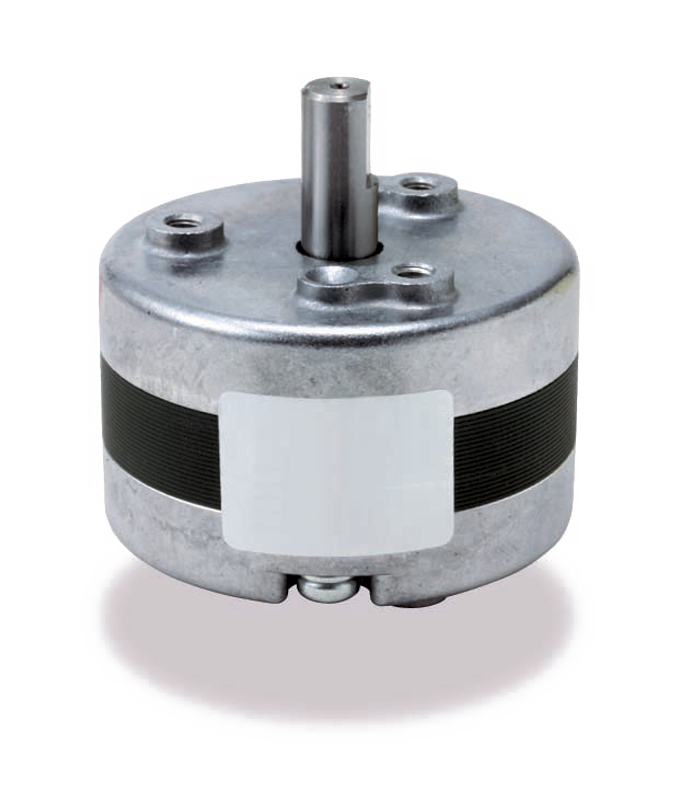
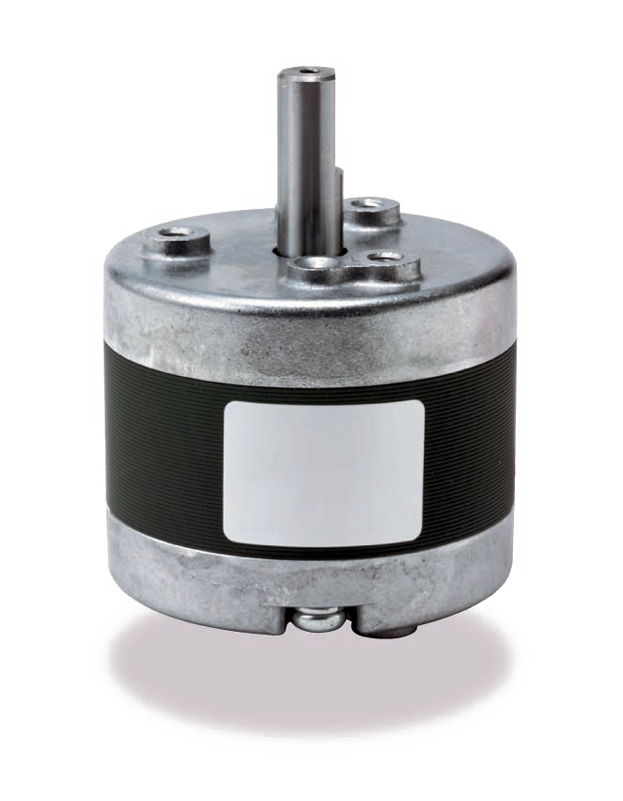
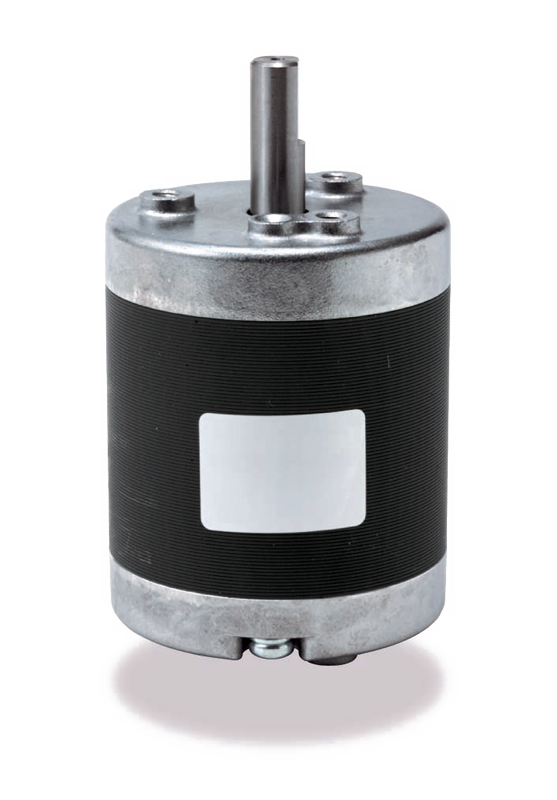
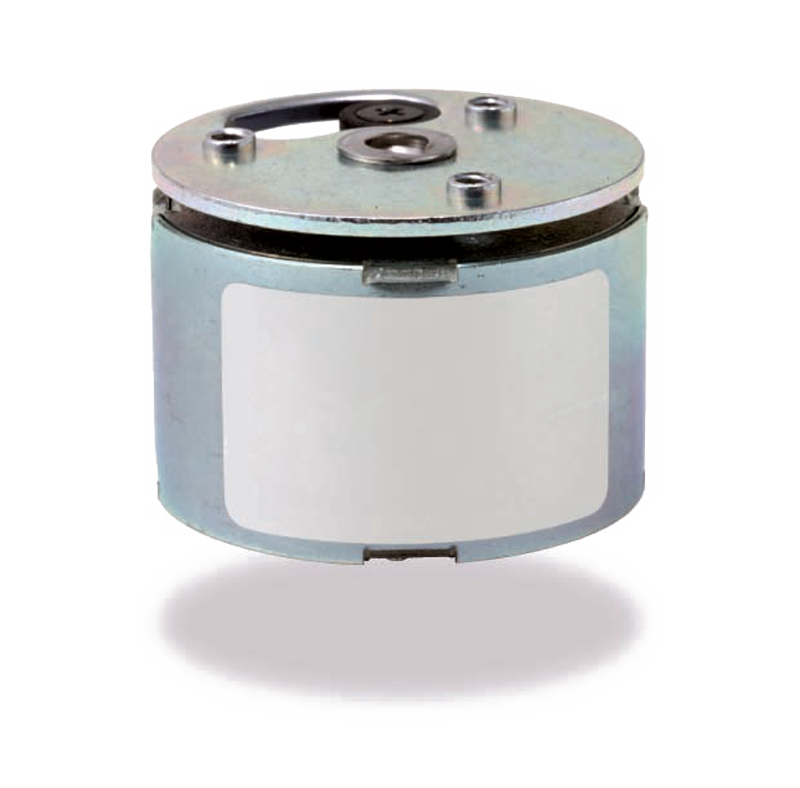
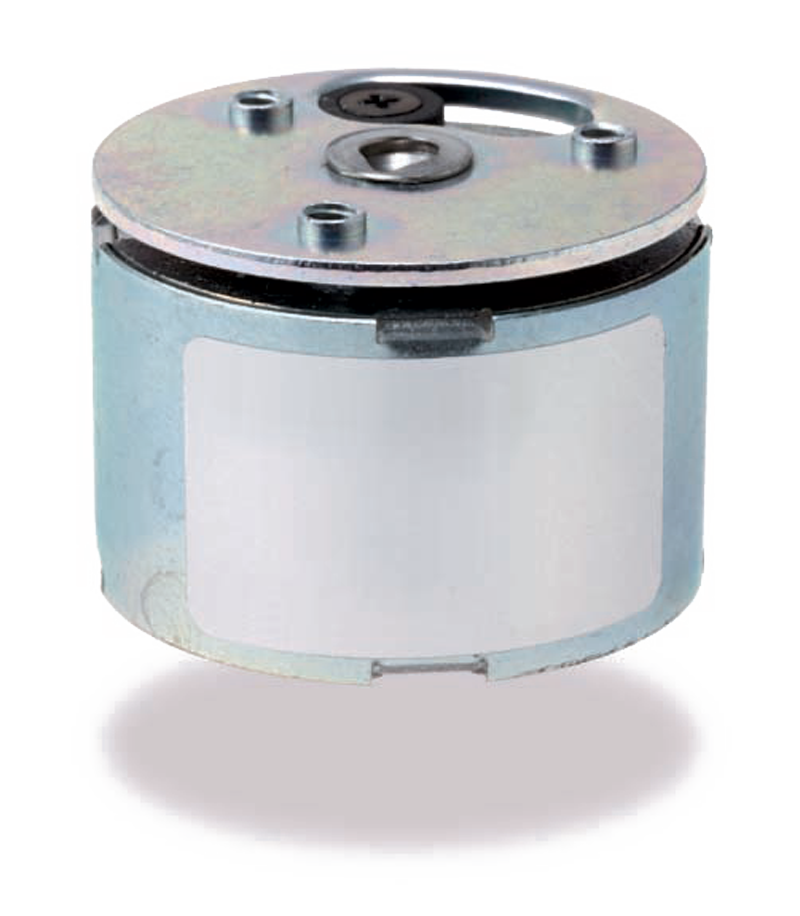
Takano’s rotary solenoids use a cylindrical permanent magnet rotor to generate true rotational motion via magnetic attraction and repulsion. They stay in position after power-off and, unlike conventional types, operate without axial shaft movement—ensuring longer life.
  • The bi-stable solenoid rotates in both directions with each current reversal and holds its position after power-off using a permanent magnet—no spring needed.
  • High power and fast response by switching current direction instead of using a spring.
  • Travel angle up to 90° with external stops.
  • No axial shaft motion; external stops reduce impact noise. Internal stop types use buffers to limit noise and vibration.
  • Long life with no sliding parts except the bearing.
bi-stable rotary solenoids

Application:
High-speed shutters for optical devices like lasers, microscopes, cameras, and ophthalmology or surveying equipment.

Series List

Flat type RSF22, 28 Series

My Image
Dimension
(mm)
∅22 × 8
DC
resistance
35 Ω

Peak Torque(N・m)

5V

12V

24V

0.0017

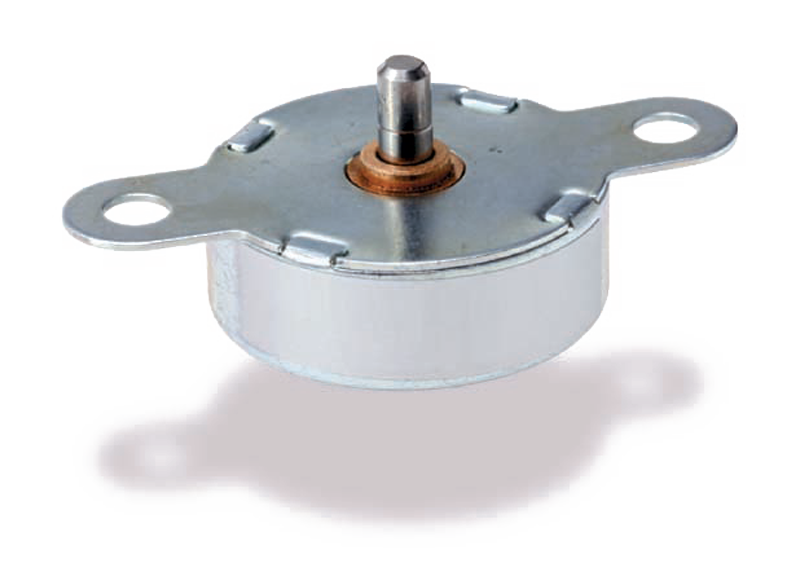
The solenoid is 8mm thick, which is rare for a solenoid. It has high holding force and provides stable reciprocating motion. It can fit into narrow gaps.
My Image
Dimension
(mm)

∅28 × 17

DC
resistance

8 Ω

Peak Torque(N・m)
5V

12V

24V

0.013

0.024

A mid-range model with a thickness of 17 mm, high holding torque and high starting torque. It can also fit into narrow gaps.

Micro type RSR7, 10 Series

My Image
Dimension
(mm)

∅7 × 10

DC
resistance

9.5 Ω

Peak Torque(N・m)
5V

12V

24V

0.00045

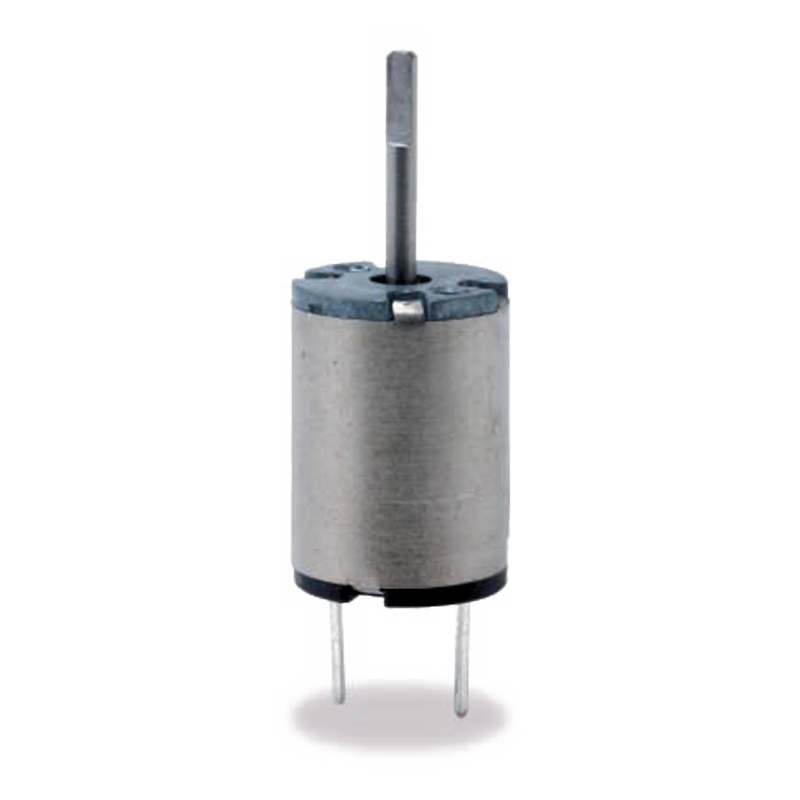
The industry’s smallest class rotary solenoid with a diameter of 7 mm. Despite its small size, it has a high holding force and achieves stable reciprocating motion.
My Image
Dimension
(mm)

∅10.5 × 20

DC
resistance

13 Ω

Peak Torque(N・m)
5V

12V

24V

0.0006

0.0013

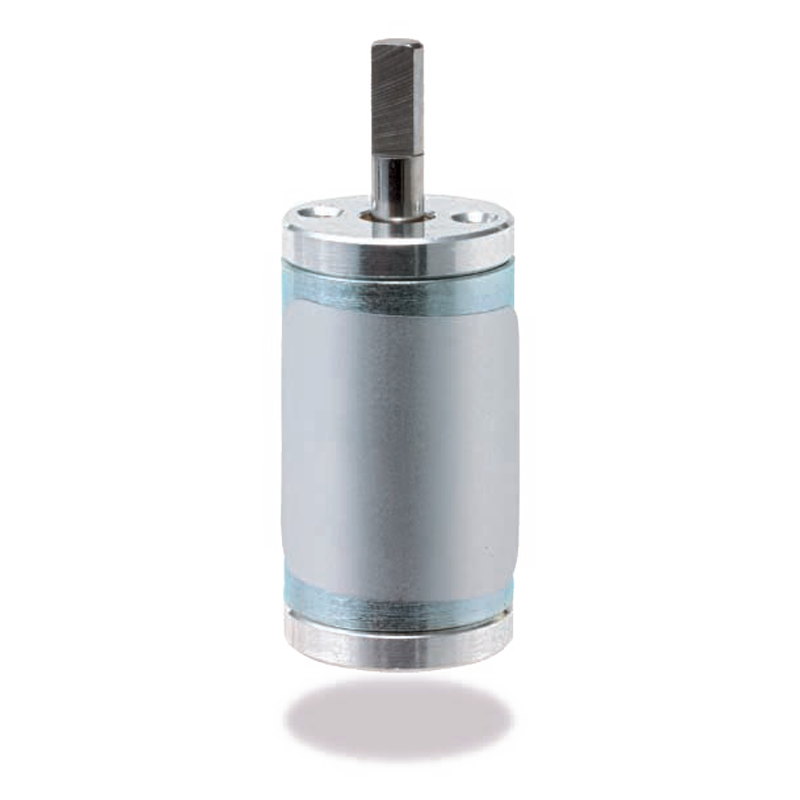
A compact model with a diameter of 10.5 mm that has high holding torque and high starting torque. It can even fit into narrow gaps.

Standard type RSR20 Series

My Image
Dimension
(mm)

∅50 × 35

DC
resistance

15 Ω

Peak Torque(N・m)
5V

12V

24V

0.04

0.07

0.12

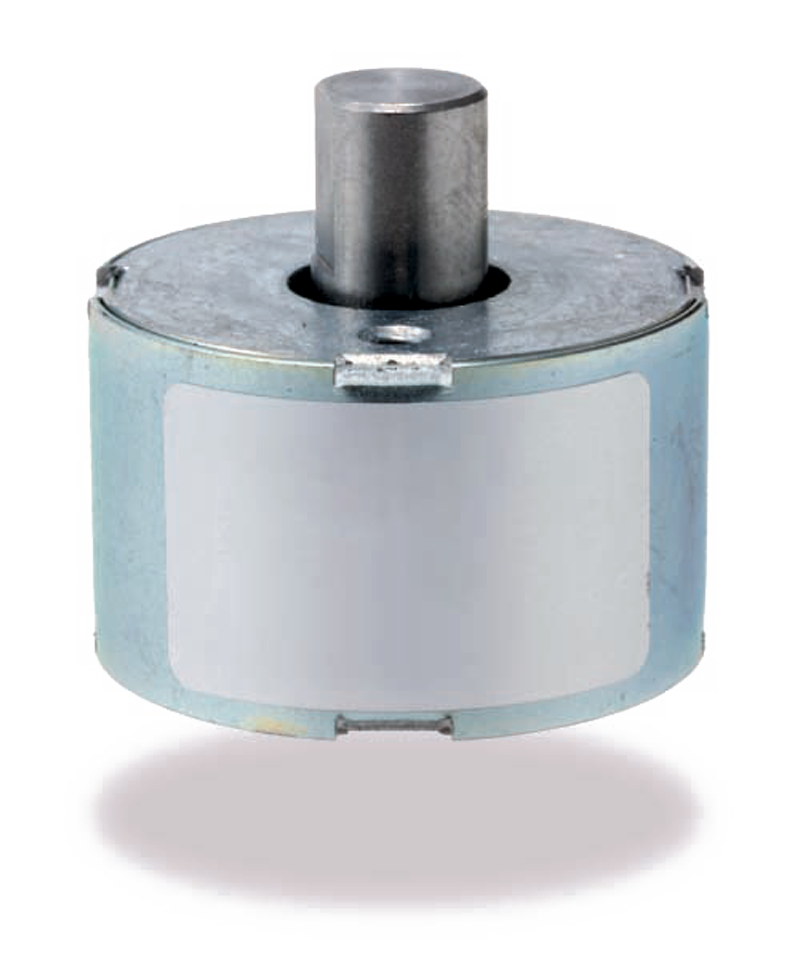
This is the most versatile model, suitable for applications that require energy savings and high speed, such as labor-saving equipment and transport equipment.
My Image
Dimension
(mm)

∅50 × 45

DC
resistance

6.2 Ω

Peak Torque(N・m)
5V

12V

24V

0.07

0.18

0.23

The diameter size remains the same, but the torque can be improved by increasing the number of laminated yokes.
My Image
Dimension
(mm)

∅50 × 65

DC
resistance

36 Ω

Peak Torque(N・m)
5V

12V

24V

0.17

0.25

Rotary Solenoids with Return Spring RSR28-SR/SL Series

This is the most versatile model, suitable for applications that require energy savings and high speed, such as labor-saving equipment and transport equipment.
My Image

Dimension
(mm)

∅28 × 20

∅28 × 20

DC
resistance

27.5 Ω

110 Ω

Peak Torque(N・m)
5V

12V

24V

0.0052

0.0052

Operating
Angle
25° 35° 45°
My Image

Dimension
(mm)

∅28 × 20

∅28 × 20

DC
resistance

27.5 Ω

110 Ω

Peak Torque(N・m)
5V

12V

24V

0.0052

0.0052

Operating
Angle
25° 35° 45°
You can choose from two types: right rotation and left rotation. You can choose from operating angles of 25/35/45°. You can choose from two types of resistance, 12/24VDC, which can be continuously energized. This model returns with a spring. There is no thrust movement, and the sliding part is only a bearing, so it has a long life. This model has a low heat generation design and is highly scalable compared to conventional models.


Structure and Operating Principles

High torque and high speed response within a constant operating angle.

function illustrated 01

Ideal for operations that reciprocate within an angle of 90° or less.

  • A rotary solenoid is a rotary actuator designed specifically for reciprocating motion.
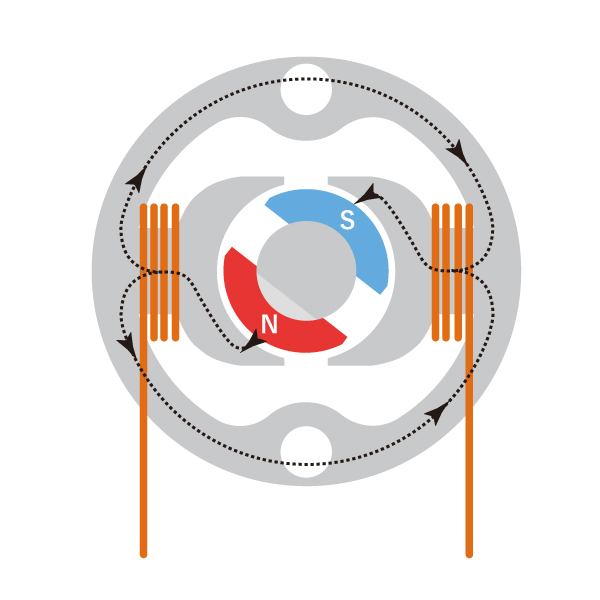
  • Our rotary solenoid consists of two yokes on the fixed side, a coil, and a movable rotor part with a permanent magnet. By switching the electrical current direction of the coil, the N / S on the coil side is switched.
  • The permanent magnet of the rotor repels the N / S on the coil side, causing reciprocating operation.
  • Although it cannot rotate like a general motor, it has higher torque, higher response, and is superior than any motor of the same size in reciprocating movement within a certain angle.

De-energized Holding Power/Low Power Consumption.

function illustrated 02
The retention torque can hold the position at no longer electrification. Power-saving because it can be designed to lower the energization rate.
  • The permanent magnet creates a magnetic field from the N pole to the S pole when de-energized. Therefore, even at the time of non-energization, holding power is kept with the adsorption force of the permanent magnet to hold the set position.
  • Able to operate with only starting current due to the lack of necessity of a holding current. Reduced temperature rise and power consumption.
  • Please select a model according to the weight of your load.

How to use bi-stable solenoid

External stops

Except for some models, Takano bi-stable rotary solenoids have no built-in stops.
Therefore, external stops must be set separately to mechanically define the travel angle.
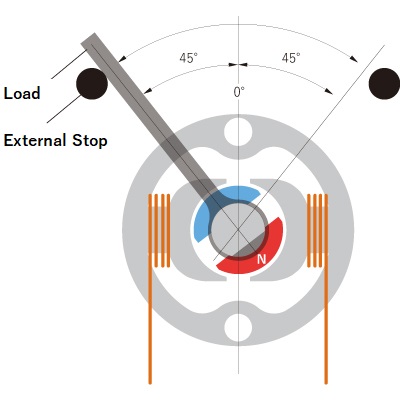
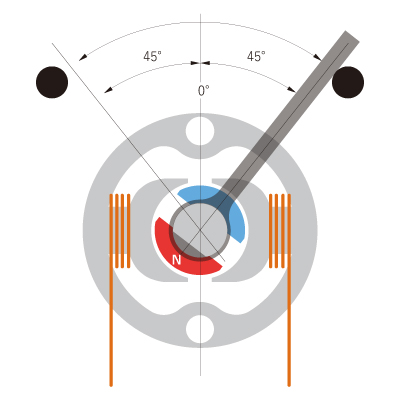
In this case, use rubber or similar buffer material for the stop. Avoid the use of metal stops that causes strong metal-to-metal impact which may lead to failure of the solenoid.

How to set external stops

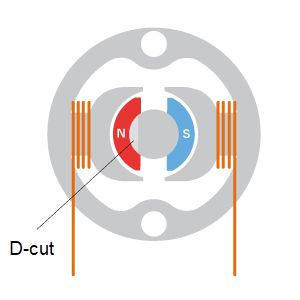
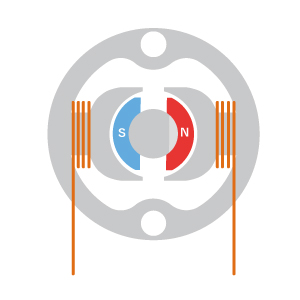
  1. When Takano bi-stable rotary solenoids are delivered (which no stops are equipped), physical relation between the magnet and the shaft D-cut is as shown in Fig. A) or B) below. The state is magnetically balanced and stable.
(A)
function illustrated 03
(B)
function illustrated 04
  1. When Takano bi-stable rotary solenoids are delivered (which no stops are equipped), physical relation between the magnet and the shaft D-cut is as shown in Fig. A) or B) below. The state is magnetically balanced and stable.
Practical Rotation Range 90°
function illustrated 05
Practical Rotation Range 90°
function illustrated 06

Bi-stable drive circuit

To rotate bi-stable rotary solenoid from one end to the other and return, polarity of energization(+/-) needs to be switched.
Fig. 2 shows a typical drive circuit diagram for your reference.
We also provide a driver board as an option for operating our solenoids.
Bi-stable drive circuit
× Modal Image
Scroll to Top